
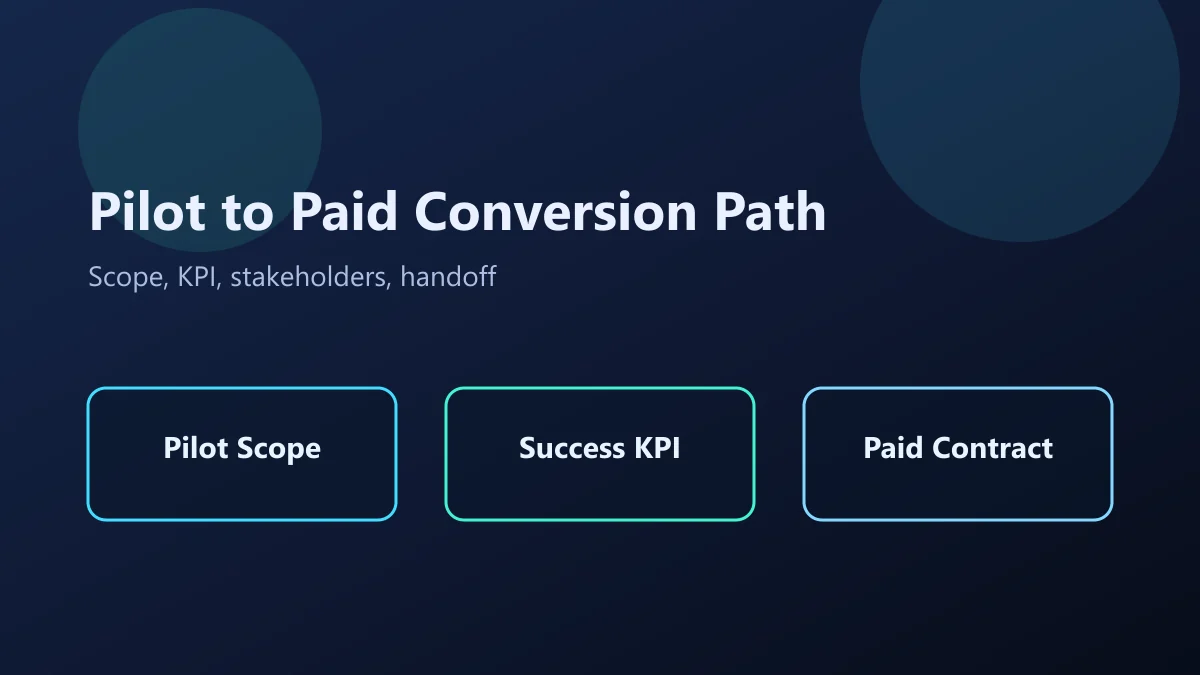
Most pilot programs fail at the last step because teams treat conversion as a future discussion. High-converting pilots are designed from day one with clear scope, KPI logic, and commercial transition criteria.
Key Takeaways
- Set conversion terms before pilot kickoff.
- Use one business KPI and one trust KPI to evaluate success.
- Tie paid plan structure directly to pilot outcomes.
1. Keep Pilot Scope Narrow and Outcome-Based
One team, one workflow, one measurable outcome. Broad scope creates attribution problems and weakens conversion confidence.
- Define exactly which process steps are in and out of scope
- Set pilot duration and review checkpoints before launch
- Document required customer-side resources upfront
2. Define Success and Failure Thresholds
Success criteria must be quantifiable and shared by both operator and buyer.
Example KPI set:
- Primary: reduce draft time from 28 to 12 minutes
- Quality guardrail: no reduction in acceptance accuracy
- Adoption signal: 70% of target team uses the workflow weekly
Without explicit thresholds, pilot results become opinion-driven and harder to commercialize.
3. Align Buyer, Operator, and Technical Owner
Paid conversion needs three aligned stakeholders:
- Operator: validates usability and day-to-day fit
- Buyer: approves budget and strategic continuation
- Technical owner: confirms security, process, and implementation viability
Missing any one of these slows or blocks commercial decision-making.
Weekly Pilot Communication Model
Use a recurring one-page scorecard every week:
- KPI baseline versus current state
- Top workflow blockers and fix status
- User adoption and feedback highlights
- Next-week implementation priorities
This reduces end-of-pilot surprises and keeps buyers engaged throughout the process.
4. Run a Conversion-Oriented Pilot Cadence
- Week 1: setup, baseline capture, stakeholder alignment
- Week 2: workflow tuning and trust control improvements
- Week 3: KPI trend review and pricing transition framing
- Week 4: final outcomes review and paid rollout agreement
By week three, the customer should already know what paid adoption will look like.
5. Create a Formal Pilot-to-Paid Handoff
Run a dedicated handoff meeting with a clear decision structure:
- What KPI target was agreed?
- What results were achieved?
- What rollout scope is proposed for paid?
- What plan and commercial terms apply?
- Who signs and what is the timeline?
Avoid vague endings like "let's revisit in Q3." They usually become lost deals.
6. Use Risk Controls To Increase Buyer Confidence
- Usage visibility and audit logging
- Fallback process for low-confidence outputs
- Named customer owner for training and support
- Transparent boundaries on data handling
These controls reduce perceived adoption risk and shorten procurement friction.
Final takeaway
High-converting pilots are commercial systems, not experiments without a finish line. Define conversion criteria at kickoff, report progress weekly, and close with a formal paid decision path.
Improve close quality further with the pricing mistakes guide and protect post-sale value using the retention playbook.
Frequently Asked Questions
Why do AI pilots fail to convert into paid deals?
Most pilots fail because success criteria are vague, buyer stakeholders are not aligned, or post-pilot pricing and scope are unclear.
When should pricing be discussed in a pilot?
Pricing should be discussed before pilot kickoff so the customer understands what paid adoption will look like after success metrics are met.
What is a strong pilot success metric?
Use one operational metric tied to business value, such as time saved per case or reduction in manual review hours.