
AI founders often treat pricing as a late-stage decision. In reality, pricing shapes your lead quality, sales cycle, and retention curve from day one. These seven mistakes are the most common early blockers.
Key Takeaways
- Price outcomes users care about, not model inputs.
- Keep plans simple and transparently scoped.
- Use pricing to reinforce trust and activation, not only ARPU.
1. Selling tokens instead of outcomes
Customers do not buy API calls. They buy faster decisions, lower error rates, and less manual effort.
Fix: define pricing value around one operational metric, such as time saved per case or reduction in review hours.
2. Creating too many tiers too early
Complex plan stacks increase confusion and reduce conversion confidence.
Fix: start with 2-3 plans maximum and make each plan clearly role-based.
3. Hiding limits and usage boundaries
Surprise limits feel deceptive and create avoidable churn.
Fix: show limits clearly on pricing pages and in-product usage dashboards before users hit thresholds.
4. Weak plan positioning
Each plan should answer who it is for, what outcome it supports, and when to upgrade.
Fix: rewrite plan descriptions in user language: role + workflow + measurable result.
5. Ignoring onboarding economics
If users fail to reach value quickly, price optimization will not save conversion.
Fix: map activation milestones to plan logic and remove onboarding friction before testing higher pricing.
6. Delaying commitment options too long
When value is proven, annual plans improve cash flow and reduce churn risk.
Fix: add annual options once your weekly usage and pilot-to-paid conversions stabilize.
7. Not building a win-back path
Churned users are high-quality signal. Many leave due to clarity gaps, not zero value.
Fix: run structured win-back offers tied to one improved workflow and one clear success metric.
Pricing review checklist
- Can a target user pick the right plan in under 60 seconds?
- Are plan boundaries transparent and predictable?
- Does every paid plan map to one measurable business outcome?
- Is the upgrade trigger explained before users reach limits?
- Do churn and downgrade surveys feed pricing updates monthly?
Final takeaway
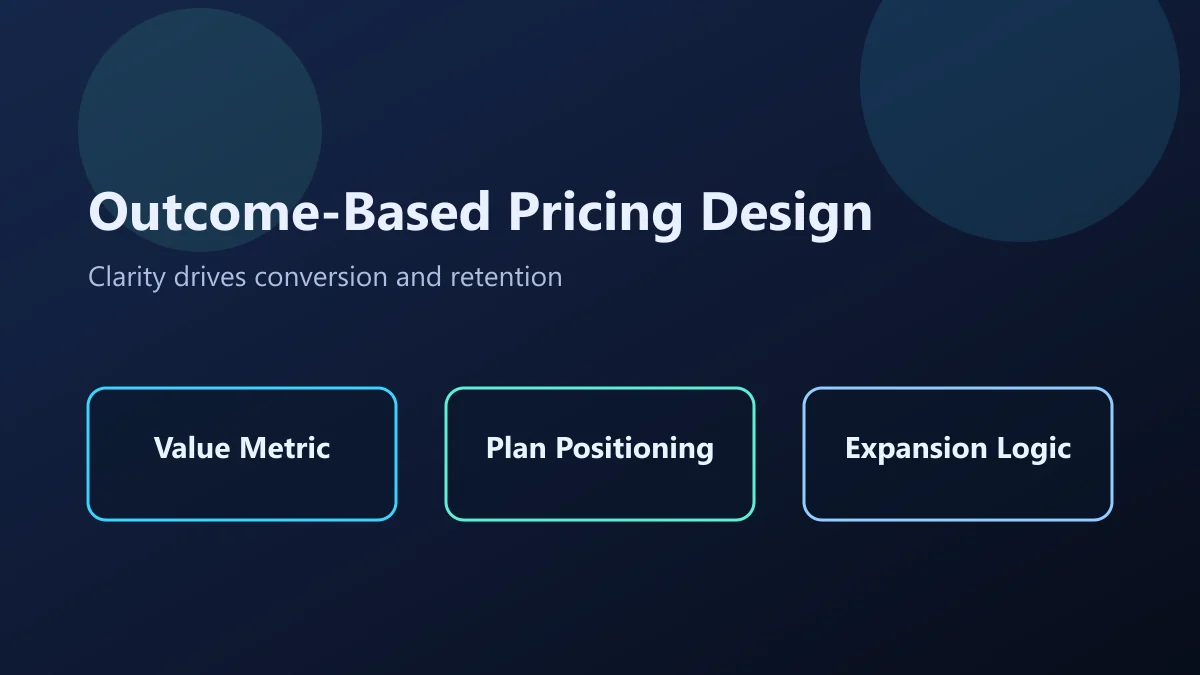
Strong AI pricing removes decision friction. Users should understand value, limits, and upgrade logic without contacting sales. That clarity drives conversion quality and long-term retention.
Use this guide with the pilot-to-paid conversion framework and the retention playbook to protect revenue after acquisition.
Frequently Asked Questions
Should AI startup pricing be based on tokens?
Usually no. Token costs matter internally, but customer pricing should center on business outcomes and predictable value.
How many pricing plans should an early startup offer?
Two or three clear plans are usually enough in early stage. More options often reduce clarity and slow conversions.
When should annual plans be introduced?
Add annual plans after you see repeated value and stable activation-to-retention patterns in your target segment.