Early AI distribution is not about traffic volume. It is about finding users with clear pain, clear ownership, and clear urgency. This guide helps you build that system without wasting budget.
Key Takeaways
- Start with one channel that matches buyer intent.
- Lead with an outcome claim users can verify quickly.
- Run weekly acquisition and messaging iterations as one loop.
1. Choose One Primary Channel First
Pick one channel where your ICP already asks workflow questions. Typical early winners are founder-led outbound, partner intros, and niche operator communities.
- Founder outbound: strongest for precise segments and fast feedback loops.
- Partner referrals: strongest when trust and domain context matter.
- Niche communities: strongest when your workflow pain is common and urgent.
Do not split effort across many channels in month one. It slows learning and hides real signal.
2. Build Message-Market Fit Before Scale
Your distribution message should answer three questions in the first screen or first message:
- Who is this for?
- What costly task does it improve?
- How much improvement is realistic?
Use concrete language. Replace generic claims like "AI-powered automation" with outcome-based positioning like "cut first-draft prep time for support leads by 35%."
3. Design a Single-Path Conversion Funnel
In early stage, one CTA path converts better than many options. Send channel traffic to one next step:
- Book a founder discovery call
- Join a pilot waitlist with segment qualification
- Start a guided onboarding flow for one use case
Keep form fields minimal. Ask only what you need to qualify urgency and role fit.
4. Run a Weekly Distribution Learning Loop
Use one operating rhythm every week:
- Publish one practical proof point from real workflow results.
- Collect objections and stalled-conversation reasons.
- Update outreach scripts, landing copy, and onboarding screens.
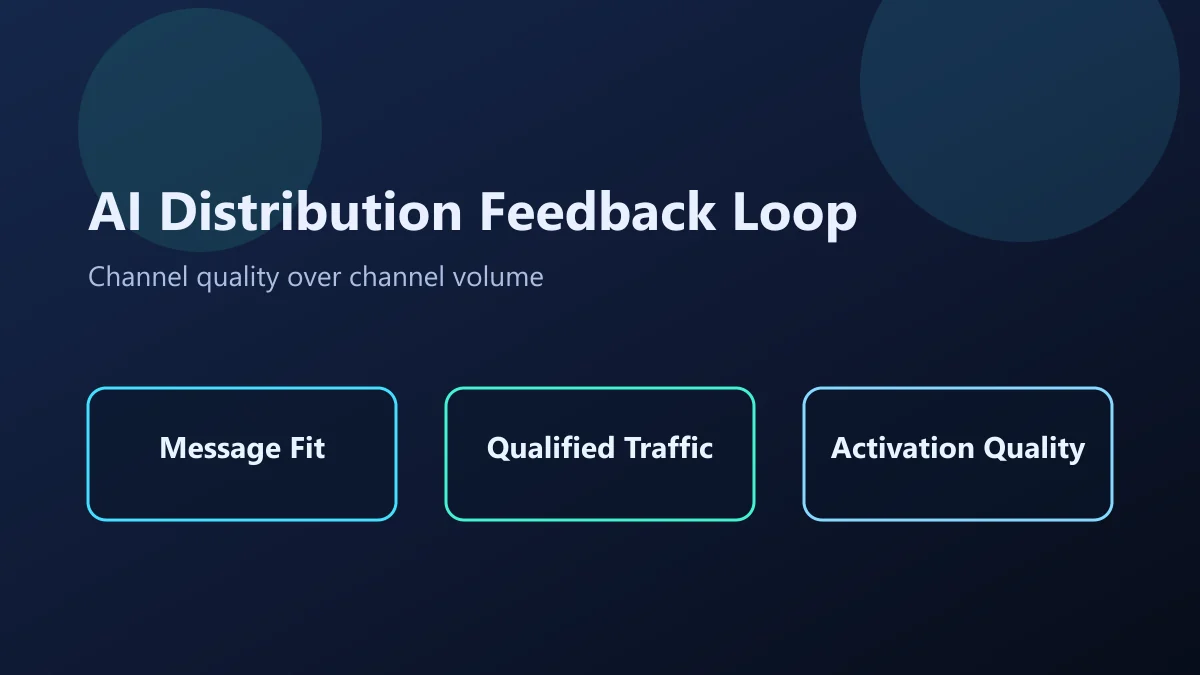
- Measure qualified replies, booked calls, and activated users.
This loop improves acquisition and retention at the same time because message quality aligns with product reality.
5. Track Metrics That Predict Revenue Quality
Avoid vanity metrics in early distribution. Prioritize:
- Qualified response rate by segment
- Call-to-pilot conversion rate
- Pilot activation rate and time-to-value
- Pilot-to-paid conversion quality
If acquisition volume grows but activation quality drops, your message is overpromising or targeting the wrong segment.
6. Know When To Add a Second Channel
Add new channels only after your first one is stable and predictable.
- Repeatable qualified lead flow for at least 4 weeks
- Consistent onboarding activation from that channel
- Known objections and proven positioning responses
Then expand carefully into one adjacent channel, not three at once.
Distribution mistakes to avoid
- Starting paid ads before your value messaging is stable
- Targeting broad segments with weak pain alignment
- Sending traffic to generic pages without one clear CTA
- Separating growth insights from product and onboarding updates
Final takeaway
Strong distribution for AI startups is a precision system: right segment, right promise, right conversion path, repeated weekly. Build signal density first. Scale channels second.
After acquisition starts working, use the pilot-to-paid conversion guide and retention playbook to protect unit economics.
Frequently Asked Questions
What distribution channel should an AI startup start with?
Start with one high-intent channel where your buyer already looks for workflow solutions, such as niche communities, partner referrals, or direct founder outreach.
Should early AI startups run paid ads immediately?
Usually no. In early stages, founder-led outbound and trust-based content create stronger signal and better conversion quality than broad paid campaigns.
What is the best early distribution metric?
Track qualified conversations and activation-to-retention quality, not just click volume or impressions.