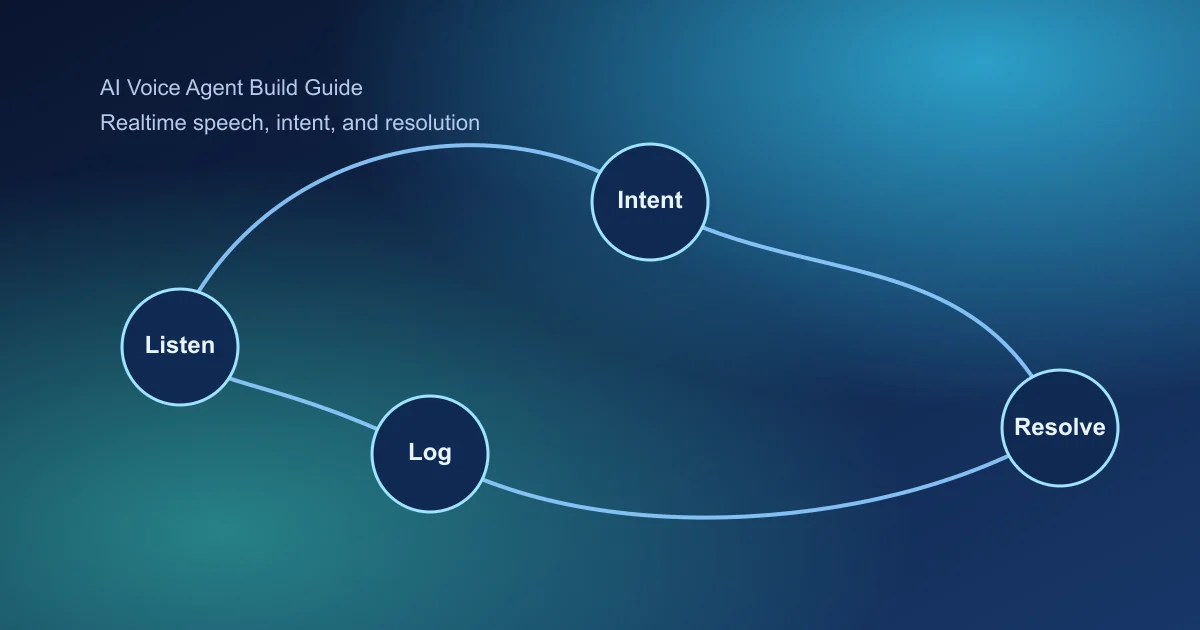
Voice AI projects are popular because they can reduce response time and support load. The challenge is delivering natural turn-taking and safe resolution under real conversation variability.
Why Voice Feels Harder Than Chat
Users tolerate delays and clarification prompts in chat more than in calls. Voice products fail quickly if turn timing feels unnatural or escalation is unclear.
That is why voice agent architecture should prioritize latency, interruption handling, and safe transfer logic before adding advanced capabilities.
Key Takeaways
- Design call flow and interruption logic before adding many features.
- Optimize latency for every turn of the conversation.
- Add explicit escalation for low-confidence or high-risk intents.
1. Define One Voice Workflow First
Start with one recurring workflow, such as appointment scheduling, account status checks, or support triage.
2. Control Latency Across the Full Stack
- Streaming speech-to-text for fast partial intent detection
- Short response planning with bounded token budgets
- Fast text-to-speech output with interruption handling
- Timeout recovery prompts when tool calls are slow
3. Route Intents to the Right Action Path
Separate informational intents from transactional intents to reduce failure chains.
- Detect intent and confidence.
- Resolve via retrieval or tool action.
- Confirm critical actions with explicit user approval.
- Summarize action result before closing turn.
4. Add Safety and Escalation Rules
- Low-confidence intent -> clarification question
- High-risk request -> human transfer
- Repeated misunderstanding -> fallback menu
- Unresolved call -> callback workflow
5. Evaluate Calls by Resolution Quality
- First-call resolution rate
- Transfer-to-human rate
- Median response latency per turn
- Post-call user satisfaction
6. Launch with Controlled Traffic
Roll out by intent category and call volume segment. Review failed call traces weekly and fix top failure patterns first.
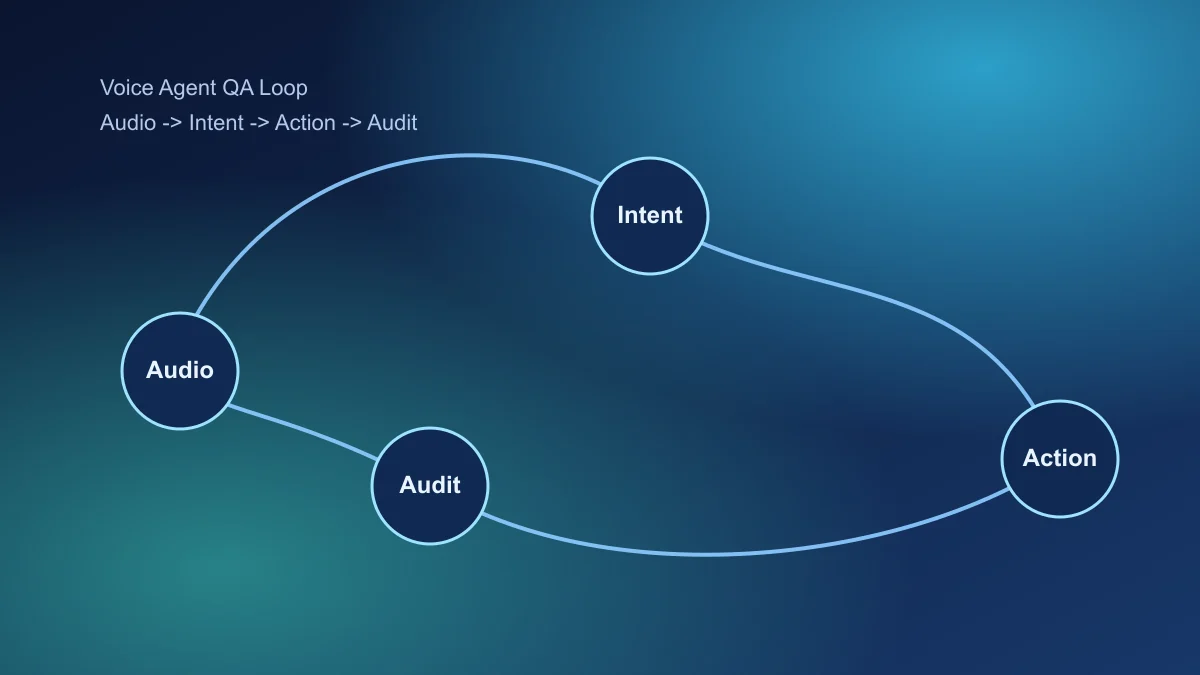
Final takeaway
The most effective voice agents are built as realtime operations systems: fast turn handling, clear action routing, and safe escalation.
Continue with AI agent project guide and workflow automation guide.
Frequently Asked Questions
What is the hardest part of building a voice agent?
Managing latency and interruption handling is usually the hardest part. Voice UX fails quickly when turn-taking feels unnatural.
Should voice agents use retrieval context?
Yes for domain-specific answers. Retrieval grounding improves factual quality and reduces hallucinated responses.
What metric defines voice agent quality?
Track first-call resolution rate, average latency per turn, escalation rate, and user satisfaction after call completion.