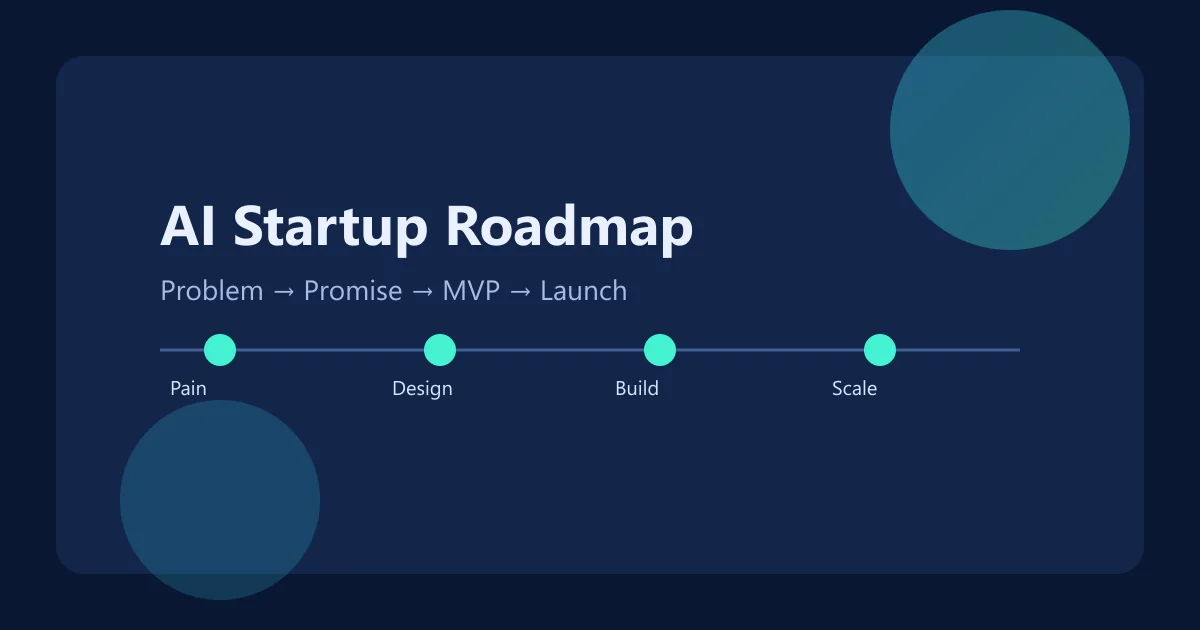
If you are asking how to start an AI startup, focus on one painful user problem, one measurable promise, and one complete workflow. This playbook shows exactly how to validate, launch, and monetize in 30 days. For implementation support, use the startup planner and the linked checklists below.
Key Takeaways
- Start with real pain, not model capabilities.
- Ship one thin vertical MVP before expanding features.
- Price around outcomes users can clearly measure.
How To Use This Guide In 30 Minutes
- Read sections 1-3 first and write down one target user pain.
- Use section 4 to define one MVP scope before discussing features with your team.
- Open the planner after section 7 and convert your notes into an execution draft.
1. Start with a painful, expensive problem
Do not start from a model. Start from pain. The best startup problems are frequent, costly, and already solved manually in ugly ways.
Interview 10-15 people with the same job-to-be-done. Ask for a recent example, not a hypothetical opinion. If 5 or more describe the same pain in different words, you have signal.
2. Define one narrow AI promise
Avoid broad promises like "end-to-end automation." Pick one concrete outcome for v1 and tie it to a number.
- Cut first-draft time by 40%.
- Reduce response latency from 4 hours to 15 minutes.
- Increase classification accuracy above your manual baseline.
Put this promise in your headline and onboarding copy. Users should understand your value in one sentence.
3. Design a human + AI workflow (not a magic box)
AI UX is not "prompt in, answer out." Real usage needs control, review, and fallback.
- Intent capture: user goal, context, and constraints.
- AI draft: a fast first output with visible assumptions.
- Review layer: easy edits, approvals, and checks.
- Action layer: export, publish, notify, or trigger next step.
- Feedback loop: capture accepted vs. corrected output.
If users cannot quickly correct the AI, they will not trust it in production. Use this AI MVP validation checklist as your QA gate before scale.
4. Build a thin vertical MVP
Ship one complete use case from input to output. Do not spread effort across many partial features.
- One role
- One workflow
- One output format
- One pricing hypothesis
Add analytics from day one: completion rate, time-to-value, edit frequency, and weekly return usage.
5. Treat UX writing as a core feature
Labels and empty states shape trust. Replace vague words like "optimize" with explicit outcomes users can predict.
Example: use "Rewrite into a concise executive summary with 3 risks" instead of "Smart mode."
6. Launch as a learning system
Frame launch as early access, not final product. Start with 20-50 target users and run weekly feedback reviews.
- Which tasks were completed successfully?
- Where did users switch back to manual work?
- Which outputs needed the most correction?
- Which screen had the highest drop-off?
Each week, ship one product improvement and one clarity improvement. That cadence compounds.
7. Monetize around outcomes, not tokens
Customers do not buy model calls. They buy saved time, lower risk, and better decisions.
Keep pricing simple and scannable. Say who each plan is for, what outcome it supports, and what happens at limits. Avoid these common AI startup pricing mistakes when designing your plans.
30-day execution blueprint
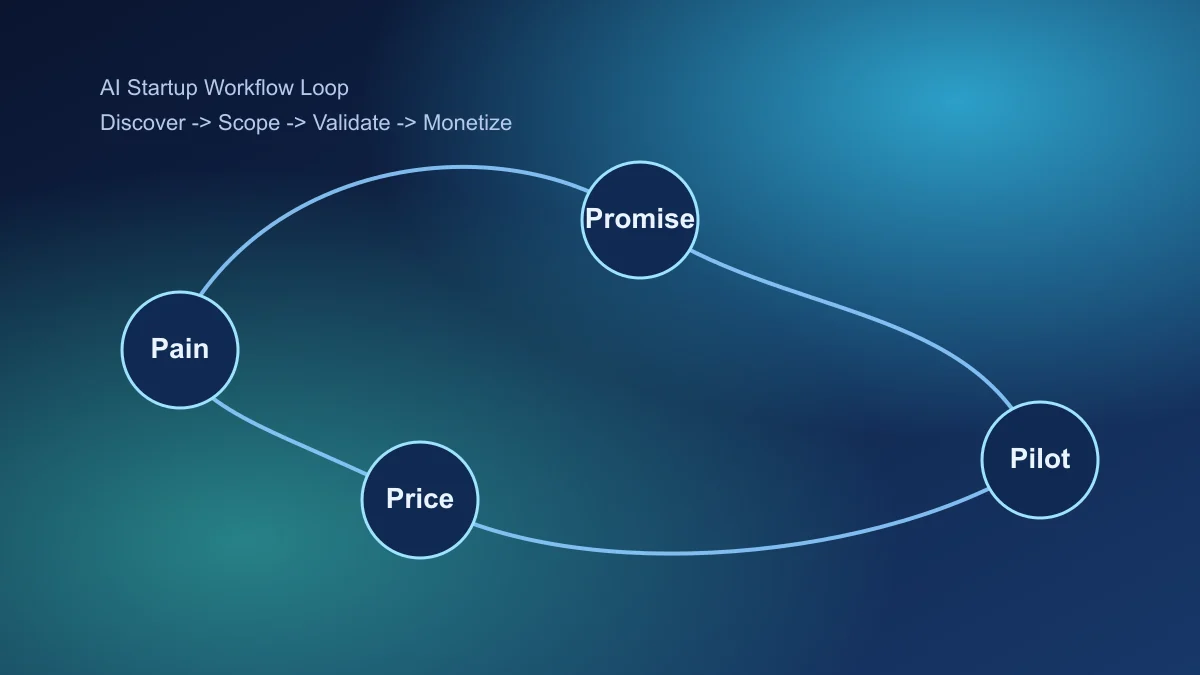
- Days 1-7: interviews, workflow map, single promise.
- Days 8-14: design thin MVP, set prompt baseline, run quick usability checks.
- Days 15-21: private pilot, instrument analytics, remove trust blockers.
- Days 22-30: refine onboarding, publish launch page, validate paid intent.
When you reach distribution week, follow this AI startup distribution playbook to acquire qualified early users without bloating acquisition costs.
Final takeaway
Winning AI startups are not the ones with the most features. They are the ones with the clearest promise, fastest learning loop, and highest trust per interaction.
Build small. Ship fast. Watch behavior. Improve weekly.
Frequently Asked Questions
How many user interviews are enough before building an AI MVP?
Start with 10-15 interviews from one clear user segment. If at least five people describe the same costly pain in different words, that is usually enough signal for a narrow MVP.
What is the fastest way to launch an AI startup MVP?
Build one complete workflow for one role and one output. Avoid broad feature scope and optimize for time-to-value under 10 minutes.
How should an early AI startup price its product?
Price around measurable outcomes like time saved or error reduction, not token usage. Keep plans simple and predictable to build trust.
What metrics should founders track in the first month?
Track completion rate, median time-to-value, edit/correction frequency, and weekly return usage. These show real product value earlier than traffic metrics.